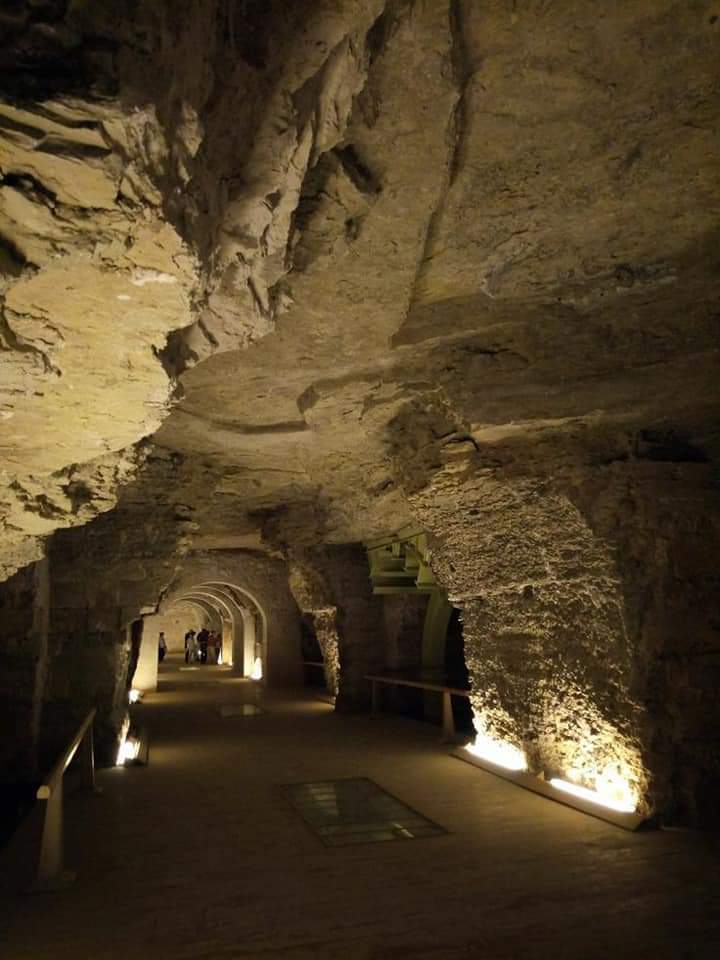
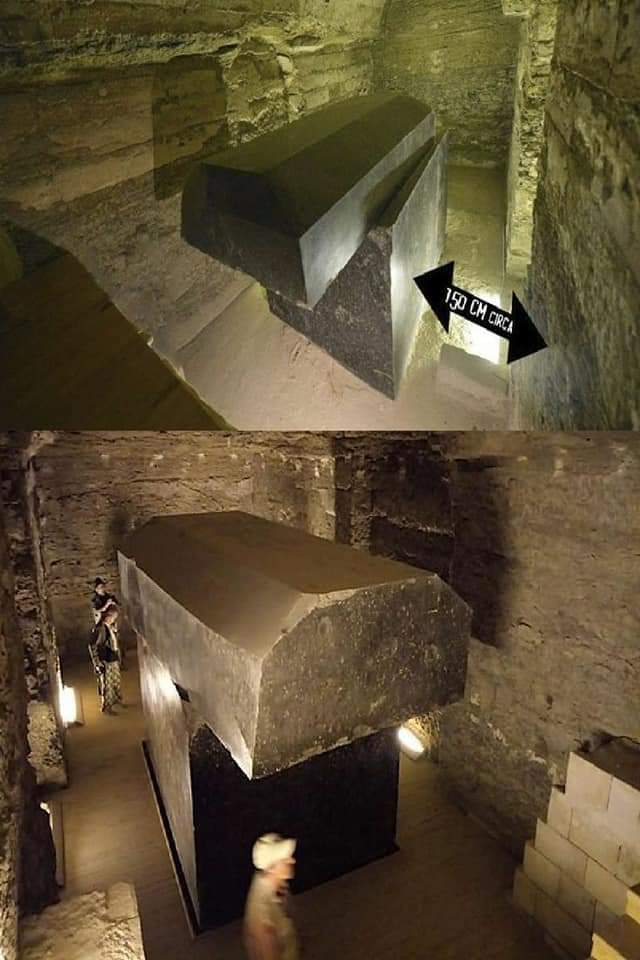
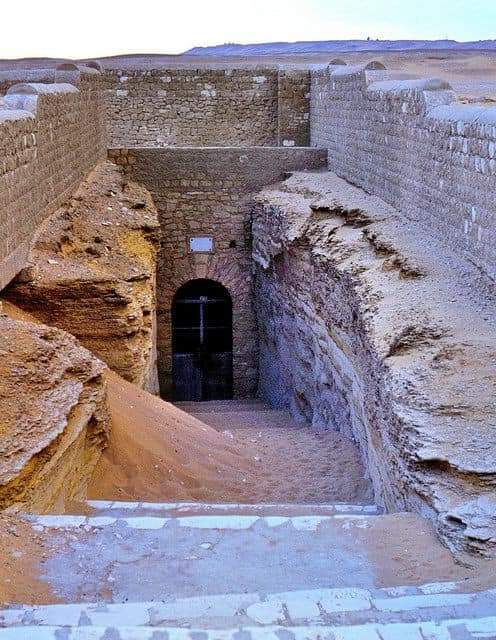
SERAPEUM OF SAQQARA The Serapeum of Saqqara, an important Egyptian necropolis located near Memphis, was built on the sepulchral complex of the Apis bulls, considered the living manifestation of the god Ptah. The oldest burials of sacred bulls, embalmed and closed in sarcophagi, date back to the reign of Amenofi III. In the thirteenth century BC Khaemuaset, son of Ramesses II, had a tunnel dug in the mountain, on the sides of which were made niches where the sarcophagi of the bulls were housed. A second gallery, 350 m long, 5 m high and 3 m wide, was built by Psammetichus I and later used by the Ptolemies. The discovery of the Serapeum is due to Auguste Mariette who excavated most of the complex. But his excavation notes have been lost and this limited the burials’ usefulness in establishing a chronology of Egyptian history. The problem consists in the fact that from the reign of Ramesses XI to the 23rd year of the reign of Osorkon II, a period estimated at about 250 years, only nine bull burials are known, a number which also includes three burials currently not known but attested by Mariette who said he had found them in an underground room too unstable to be excavated. Egyptologists believe that there should have been a greater number of bull burials in the period considered, as the average lifespan of a bull was 25-28 years, if it did not die sooner, and four burials attributed by Mariette to the reign of Ranmesse XI. have been backdated. This created a gap of about 130 years that scholars have tried to fill in various ways. According to some, the entire chronology of the twentieth dynasty must be revised with a shift forward in the dates. According to other scholars, there are further burials of bee bulls that have not yet been discovered. Wikipedia good morning

 Breaking news