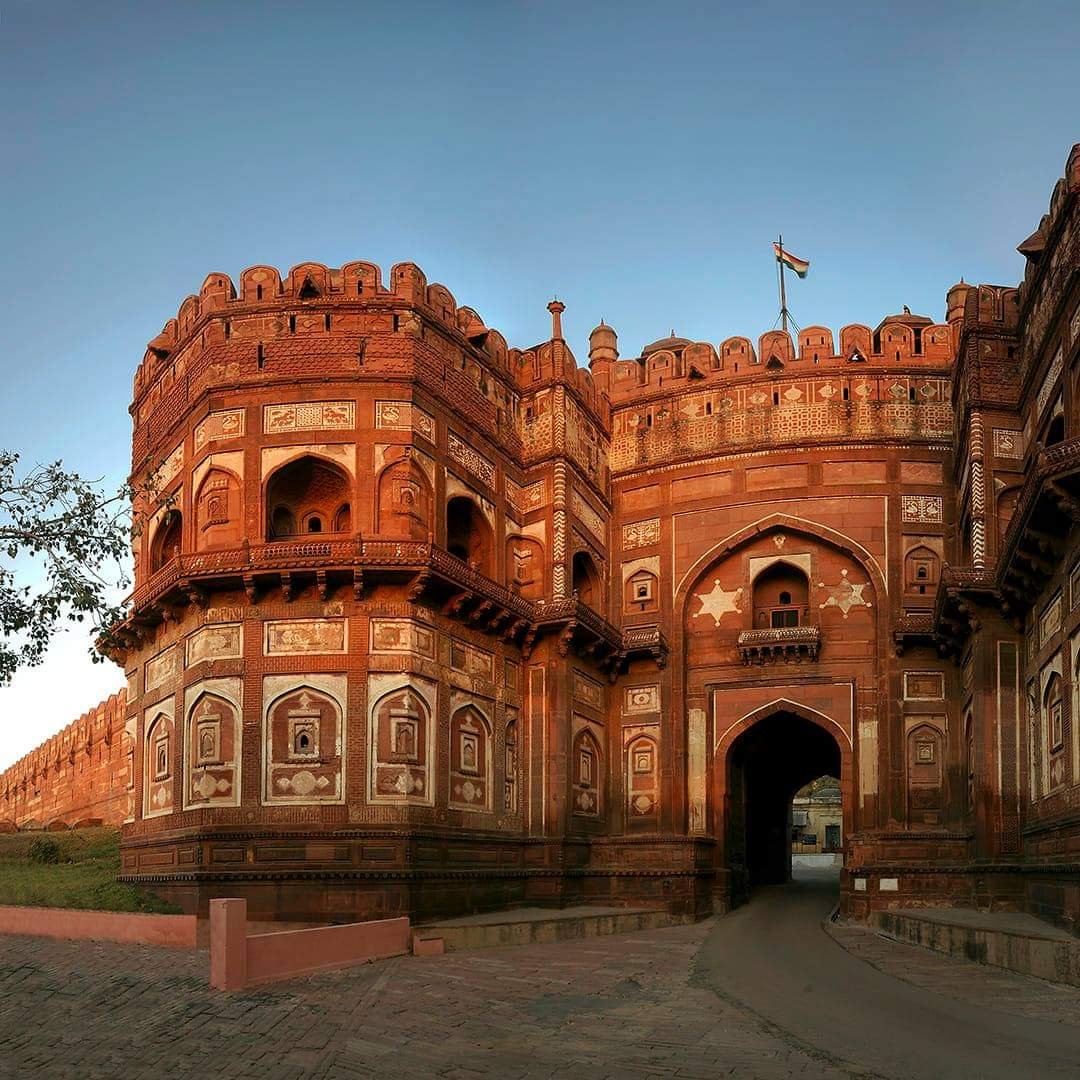
Over time, Fatehpur Sikri gathered the reputation of a ‘ghost town’ – still waiting for its occupants, coming alive at night. Appealing, yes, but such yarns could be spun for any deserted settlement which had fallen on hard days after privileged origins. Not the Agra Fort. Here, ghosts actually made life a living hell for the inhabitants after Akbar’s entourage moved in, in the late-1560s. Or so some stories go. Was this also an overarching motivation for the exodus to Sikri, and not simply Khwaja Salim Chishti’s magnetism? Regardless, Akbar endured a strained relation with his great creation, despite its starring role at the height of Mughal might.Abu’l Fazl records that the fort was embellished by 500 buildings in the Gujarati and Bengali styles. The conquests of both these critical-but-distant provinces, however, unfolded when the imperial ‘camp’ was at Fatehpur. Even his historic triumph over the Sisodia stronghold of Chittorgarh and its uncharacteristic massacre in 1567-68 sits uneasily on the haloed emperor’s resumé. Agra had been witness to his desperate desire for male heirs. Once fulfilled, Akbar had taken the road to Sikri post-1569, only for hydrological concerns to force him out of that beloved city – hewn in his unique vision – after merely 14 years. Instead of Agra, though, the Timurid scion headed to Lahore. When he finally chose Agra again, it was as an older, wearier man in 1598. Faizi, Tansen, Birbal and Todar Mal had long departed. Of his sons, Murad died in 1599; Akbar had to suffer Daniyal’s passing too before his own demise; and Salim, the ‘gift’ of Chishti, tormented him with rebellious insubordination, eventually snatching Fazl away too.Ironic that the pre-Mughal fort here was called ‘Badalgarh’ – those clouds always hovered over Akbar at Agra, till the very end in October, 1605.AGRA FORT, AGRA, UTTAR PRADESHThought by ILF Expert Akash Chattopadhyaya

 Breaking news