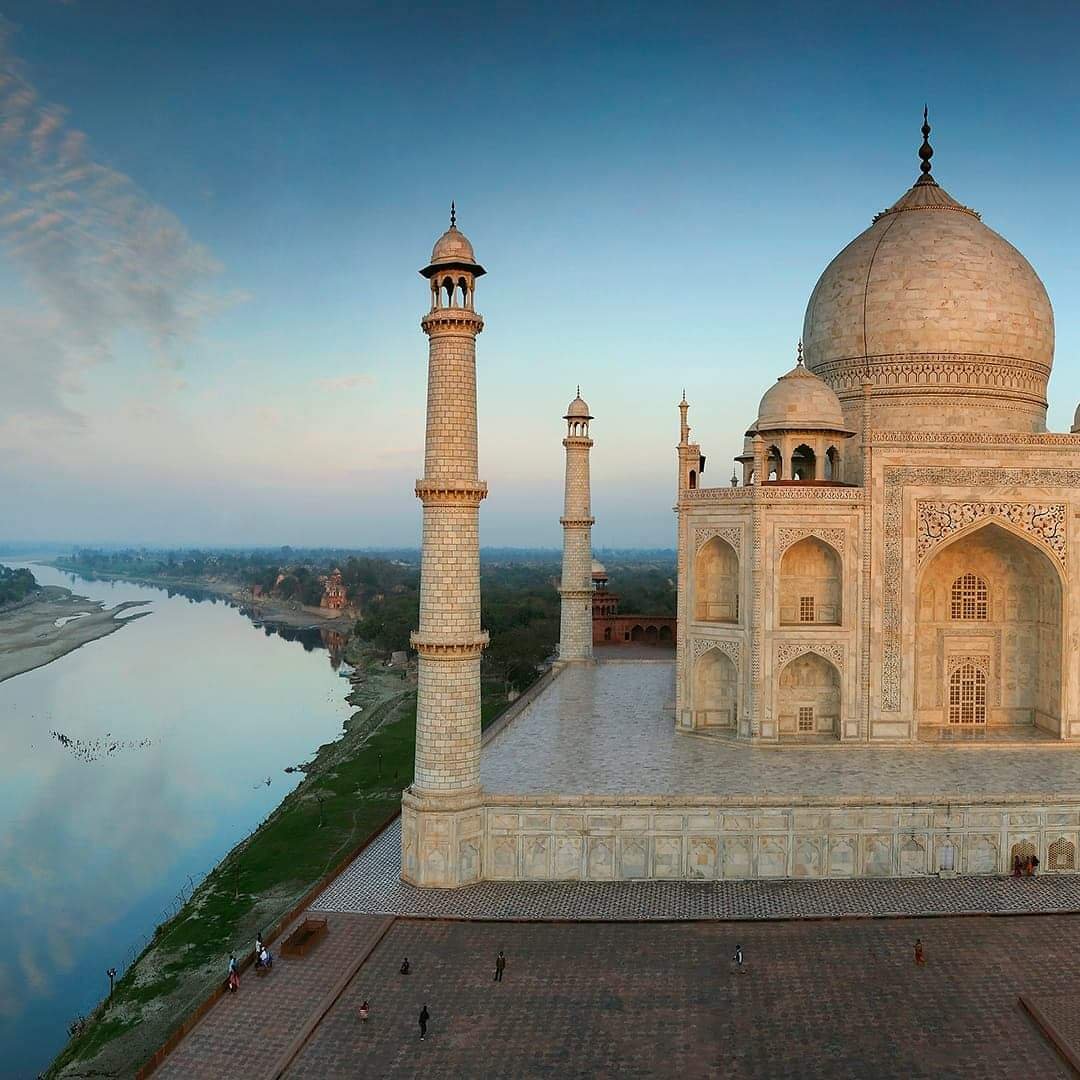
Poised at the edge of the River Yamuna. The Mughals settled in Agra, lured by the fresh waters of the Yamuna River which was fed by the melting snows of the Himalayas. Shahjahan only ever visited the Taj Mahal by river on a long boat from Agra Fort. His riverfront entrance was a small door with marble steps. From here he could visit Mumtaz Mahal’s grave, in the crypt, below ground level, accessed through painted galleries and suites used only by him and his immediate family. In his time, the mausoleum was a sacred space. At the upper level the cenotaph was where prayers were read around the clock, attended only by the royal family. The men came in the day and the women at night. The floor was spread with velvet carpets and lit with golden orbs. The Hafiz would read prayers around the clock in the outer chambers. Unequivocally the verses inscribed over the entrance say “Enter thou into my paradise”. The immense size of the mausoleum is balanced by the minute detail in the inlays and carving. Built in brick and clad in stone this was an industrial undertaking, with craftsmen from around the region engaged in the Empire’s monumental construction. While there are no detailed records of its building, there are Lahori’s records which note ‘the heaven reaching Guava shaped dome’. A double dome was already in use in India, but at the Taj Mahal it rose on an elongated neck to dizzying heights, making it even more remarkable. Inlaid around the neck of the dome are flowers in perpetual mourning. The Taj Mahal was a sacred space; it was also the Emperors statement of supreme power. Flush with his conquests in the Deccan, the Taj Mahal was designed for posterity for the Padshah, or King of the World as he saw himself; as much as it was a devotion to his beloved wife. TAJ MAHAL, AGRA, UTTAR PRADESH Thought by ILF Expert Amita Baig

 Breaking news